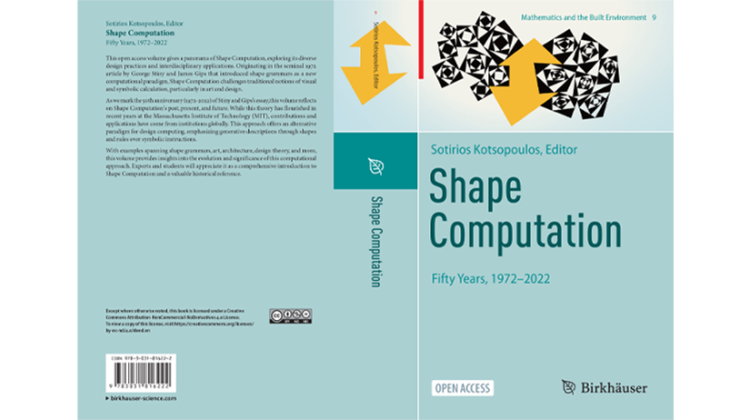
Shape Computation: Fifty Years, 1927-2022 is available now as open access. Edited by Dr. Sotirios D. Kotsopoulos SM '00, PhD '05, it gives a panorama of Shape Computation, exploring its diverse design practices and interdisciplinary applications. Originating in the seminal 1972 article by George Stiny and James Gips that introduced shape grammars as a new computational paradigm, Shape Computation challenges traditional notions of visual and symbolic calculation, particularly in art and design.
This volume is a timely introduction to shape grammars for students and experts, with topics ranging from art and architecture, to engineering and education. With chapters such as “A Generative Grammar for the Design of Adaptive Intelligent Virtual Worlds” and "How Is That? Computing the Temporality of Drawing, Shape Computation offers a timely discussion of the applications of shape grammar while also serving as a historical reference. Contributors to this book represent faculty and alumni of MIT Architecture including George Stiny, Professor; Terry Knight, William and Emma Rogers Professor of Design and Computation; Dina El-Zanfaly, SM '11, PhD '18, and many more.
From the foreword by George Stiny:
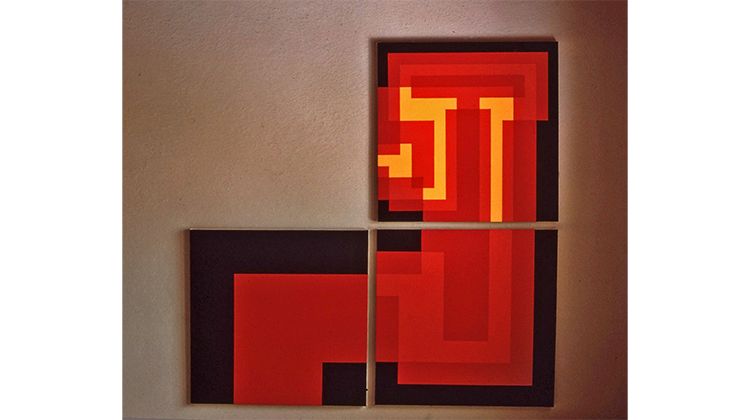
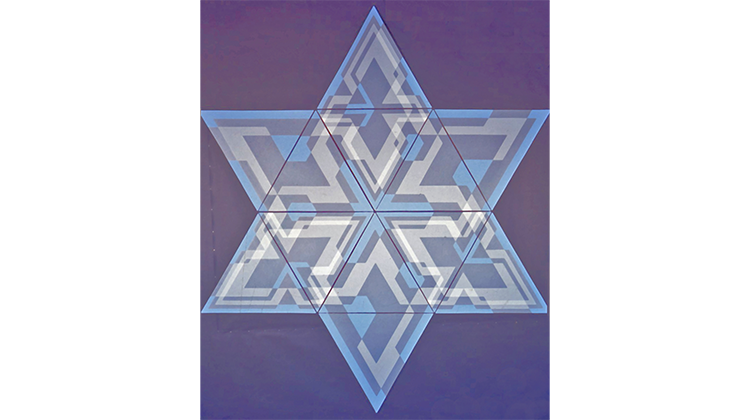
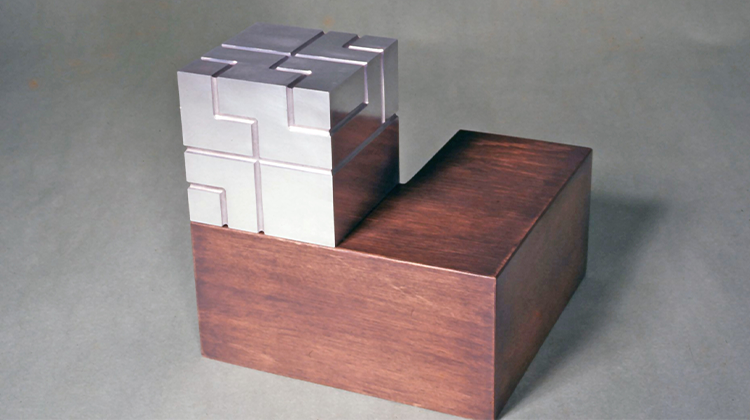
“The first published version of shape grammars was in 1972—it marked the official start of the subject. There were rules in a shape specification and rules in a material specification that worked in parallel for painting and sculpture. This mapped onto Alberti and architecture in the separation of shapes (form), and materials and making. (Today, weights put materials in shapes.) Jim Gips joined me to write the paper and brought in computers to calm my zeal for seeing/looking in art and design. The gap between computers and seeing opened three years later in our Ph.D. dissertations. (Gips did computer science at Stanford, and I was in engineering at UCLA.) Gips wrote the first computer program for shape grammars in terms of polygons given by points; they were the symbols/primitives—atoms and units, 0’s and 1’s—needed to calculate…But this book fills in many of the blanks, as it surveys unmapped domains. The range is remarkable—going from personal tales of art, architecture, and calculating with shapes to shape grammars that bring in time in painting and making in craft to how and why shape grammars can’t help but ignore data in ML and LLMs to the tricks of shape grammars in studio and practice to yet more and more. This shows the power and reach of seeing and doing in shape grammars at 50. It’s a super start to another 50 years that may influence (re-create) what’s been done, in the way embedding and fusing in shape grammars change familiar (prior) things in terms of uncertain (current) ones—what I know now is the result of what I see next. It’s all fresh and new. With some luck, I’ll revel in the sixth decade of this and the seventh; they promise boundless delight. Shape grammars swerve and weave in extravagant arcs and impossible curves to calculate “in the region of the many and variable”—their loftiest goal is surprise."