





Spring 2026 AKPIA Lecture Series: An Evening With: Ahmed Abdelazim
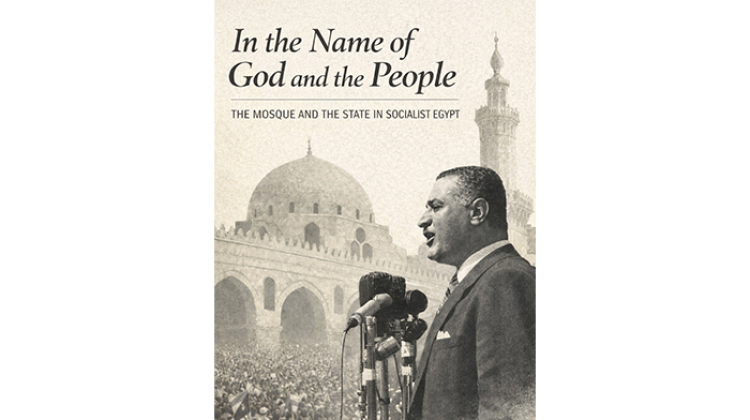
In The Name of God And The People: The Mosque And The State In Socialist Egypt
Ahmed Abdelazim
Bio
Ahmed Abdelazim is the current Aga Khan Postdoctoral Fellow at the Massachusetts Institute of Technology. His research focuses on Egypt’s material, visual, and architectural culture in the second half of the twentieth century, with particular attention to the intersections of architecture, politics, religion, and everyday life.
Trained initially as an architect, Ahmed’s work is deeply interdisciplinary. He holds an MA in Islamic Art and Architecture and an MA in Cultural Anthropology from the American University in Cairo, in addition to formal training in Islamic studies. In December 2024, he completed his Ph.D. in Art History at the University of Wisconsin–Madison. His dissertation, From Nation to Sensation: Discourses on the “Islamic” in Egypt’s Contemporary Architecture (1967–2011), examines how architecture became a key site for negotiating religion, nationalism, and state power in modern Egypt.
Alongside his academic research, Ahmed has been actively involved in curatorial and archival work. He served as project coordinator for The Mashrabiya Project at the Museum for Art in Wood in Philadelphia, collaborated with the Arab Center for Architecture on the exhibition A Journey in Architectural Archives at the Sharjah Architecture Triennial, and worked with UNESCO on archiving the Hassan Fathy collection at the American University in Cairo.
Ahmed is also the author of Kanīs al-Kharāb (Architecture of Doom), an Arabic-language book that critically examines the role of architecture in the realization of the Zionist colonial project on the ground. His forthcoming book, Contemporary Architecture in Egypt, 1970–2010, to be published by AUC Press, offers the first comprehensive scholarly account of Egypt’s contemporary architectural production within its broader social and political contexts.
Today’s talk, “In the Name of God and the People: The Mosque and the State in Socialist Egypt,” draws directly from this long-term research agenda, exploring how mosque architecture became a charged site where religion, ideology, and state power converged during the Nasser era.
Abstract
Recent scholarship has underscored the centrality of architecture in materializing Egypt’s revolutionary political project, with infrastructural and mass-housing schemes operating as visual and spatial instruments of modernization. This process was accompanied by a deliberate and systematic marginalization of Islamic symbols and institutions from the public sphere. As this paper argues, this configuration, shifted decisively in the aftermath of the 1967 defeat in the Six-Day War. In response to the crisis of political legitimacy, the state recalibrated its ideological project through the selective reactivation of Islamic visual and material culture. Drawing on archival research and primary sources, this paper examines state-commissioned mosques and the mediated circulation of Islamic imagery in print culture as technologies through which national politics were rearticulated and authority was reconstituted.
free and open to the public