




Dong Nyung (DN) Lee
Projects
From Ash to Soil
Option Studio 2025 Spring
Instructor: Roi Salgueiro Barrio
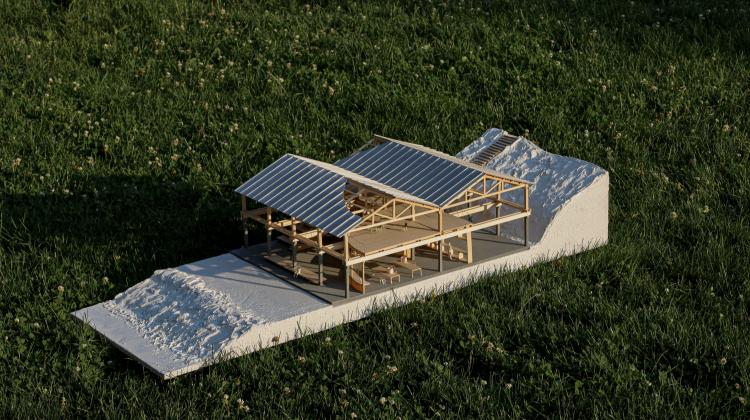
This project proposes a biochar production facility and community farm in Galicia that rethinks what happens after harvest, when forestry residues are typically treated as waste to be cleared on site. Instead, low value branches and twigs left from silviculture are collected and transformed into biochar, a charcoal-like material produced by heating biomass in a low-oxygen environment. Mixed with compost, the biochar becomes a soil amendment that returns carbon and nutrients to the ground, linking forestry and agriculture in a cyclical local economy.
Instructor: Roi Salgueiro Barrio
This project proposes a biochar production facility and community farm in Galicia that rethinks what happens after harvest, when forestry residues are typically treated as waste to be cleared on site. Instead, low value branches and twigs left from silviculture are collected and transformed into biochar, a charcoal-like material produced by heating biomass in a low-oxygen environment. Mixed with compost, the biochar becomes a soil amendment that returns carbon and nutrients to the ground, linking forestry and agriculture in a cyclical local economy.
Strand for Memory
Core II 2024 Spring
Instructor: Rafi Segal
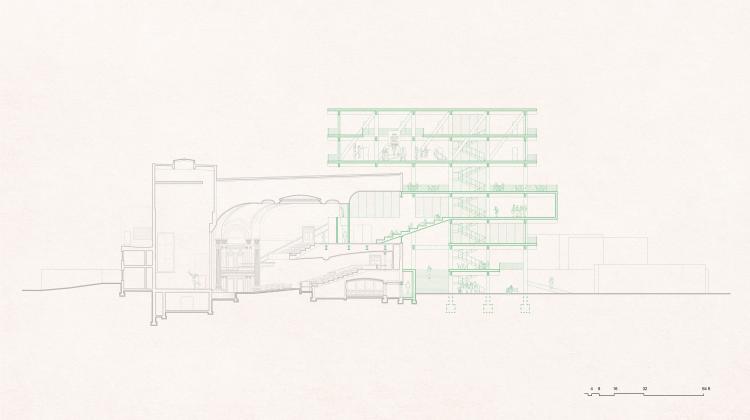
This project aims to expand the Strand theater’s offerings while keeping its original purpose as a performance stage that has supported the residents and artists of Dorchester for decades. Based on the autobiographical memories of the Strand, this project focuses on recollections from people who were active in the theater decades ago. The theater’s strong connection with the local community rose particularly through educational programs that introduced local students to theater arts. Some of these students have since become theater artists and educators. Reflecting on this sustainable cycle, the project aims to extend the theater to provide artist residences and educational facilities managed by the artists themselves, while preserving its performance area.
Instructor: Rafi Segal
This project aims to expand the Strand theater’s offerings while keeping its original purpose as a performance stage that has supported the residents and artists of Dorchester for decades. Based on the autobiographical memories of the Strand, this project focuses on recollections from people who were active in the theater decades ago. The theater’s strong connection with the local community rose particularly through educational programs that introduced local students to theater arts. Some of these students have since become theater artists and educators. Reflecting on this sustainable cycle, the project aims to extend the theater to provide artist residences and educational facilities managed by the artists themselves, while preserving its performance area.
Fenway Victory Gardens
4.024 Architecture Design Studio II
Instructor: Daniel Marshall
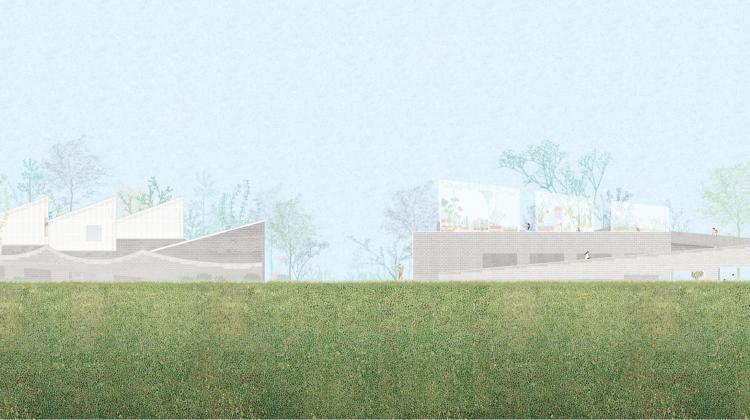
Fenway Victory Gardens is defined by its irregularity and individuality. More than 500 garden plots make up the site, each distinguished by unique selections of vegetation and hand-crafted furniture. The project proposes a set of inclusionary spaces: the Seed Bank and the Exhibition Greenhouse. Each program has “Precious Objects”, discovered by the gardeners and the visitors: the seeds contained in the hanging jars at the Seed Bank and the plants placed upon the hanging tables at the Exhibition Greenhouse.
Instructor: Daniel Marshall
Fenway Victory Gardens is defined by its irregularity and individuality. More than 500 garden plots make up the site, each distinguished by unique selections of vegetation and hand-crafted furniture. The project proposes a set of inclusionary spaces: the Seed Bank and the Exhibition Greenhouse. Each program has “Precious Objects”, discovered by the gardeners and the visitors: the seeds contained in the hanging jars at the Seed Bank and the plants placed upon the hanging tables at the Exhibition Greenhouse.
Of Parts and Particles
4.025 Architecture Design Studio III
Instructor: Michael Stradley
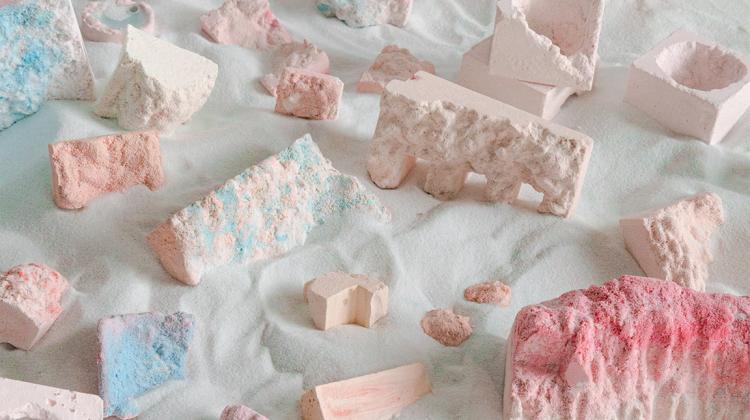
The project consists of three parts, alterating between the digital and the physical realms. Each part is an extension of the previous, expanding its dimension (planar to volumetric, imaginative to real-world) and scale while demonstrating the interplay of colors and unique material qualities.
Modeling and digital formwork are not merely tools for representation but a source of inspiration itself, through which new materiality and form are tested. Color is taken as the central architectural protagonist of the project, expanding beyond its commonplace notion as the purely formal and the aesthetic.
Instructor: Michael Stradley
The project consists of three parts, alterating between the digital and the physical realms. Each part is an extension of the previous, expanding its dimension (planar to volumetric, imaginative to real-world) and scale while demonstrating the interplay of colors and unique material qualities.
Modeling and digital formwork are not merely tools for representation but a source of inspiration itself, through which new materiality and form are tested. Color is taken as the central architectural protagonist of the project, expanding beyond its commonplace notion as the purely formal and the aesthetic.