





Simon Lesina-Debiasi
Simon Lesina-Debiasi is an architectural designer, researcher, and artist whose interdisciplinary work focuses on exploring questions around the environmental impact of digital network infrastructure and material intelligence in fabrication and design.
He is currently a Lecturer and Postgraduate Teaching Fellow in the architecture department at MIT and worked previously as research assistant at the Self Assembly lab, teaching assistant at MIT, lecturer at the School of Architecture at Northeastern University, and architectural designer at Landing Studio.
He received a SMArchS in Design and Computation MIT, a M.Arch degree from Princeton University School of Architecture, and a B.Arch from the Institute for Art and Architecture at the Academy of Fine Arts Vienna.
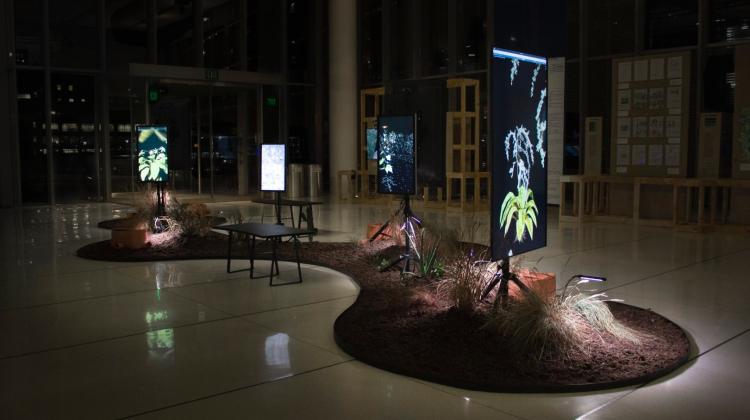
Installation Project for Information+ Conference hosted by Northeastern University’s College of Arts, Media, and Design (CAMD) and MIT’s School of Architecture and Planning through the Leventhal Center for Advanced Urbanism (LCAU) and Morningside Academy of Design (MAD).
Exhibited Nov. 2025 - Jan. 2026 in the MIT Media Lab Lobby
Mesa, Arizona has become a major hub for data center infrastructure, hosting operations by tech giants Meta, Google, and Apple. Located at the edge of the Sonoran Desert, this expansion strains the region's already limited water resources, with water used to cool data centers commodified at the expense of local ecologies.
This installation calls attention to the environmental cost of this development through evaporatively cooled computers that render flora native to Maricopa County. Built from salvaged parts, these machines use a reversed zeer pot cooling method: as the computers heat up rendering plant animations, they evaporate water that dribbles onto the living plants below. The screens of the real-time Blender interface include endangered dryland and riparian species that rely on dwindling groundwater sources, juxtaposed with maps and archival images of Mesa's development.
Through zeer pots, living and rendered plants, the installation urges viewers to consider the material impacts of computational infrastructure: running a program might just run Mesa—and its delicate desert ecology—dry.
Advisor: Terry W. Knight, PhD
William and Emma Rogers Professor of Design and Computation
Department of Architecture
Reader: Ellan F. Spero, PhD
Instructor
Technology and Policy Program, Institute for Data Systems and Society,
Department of Material Science and Engineering
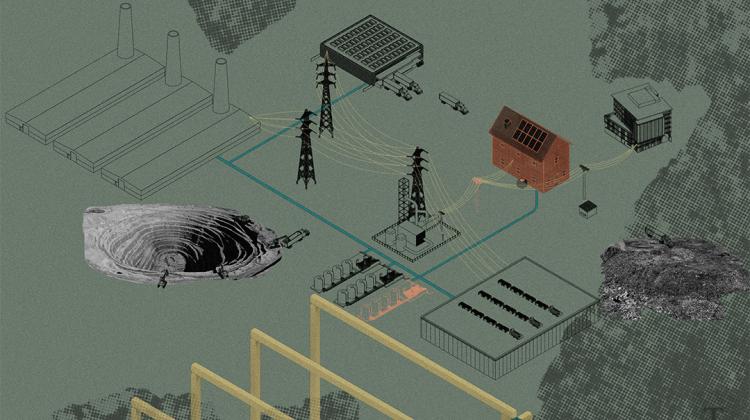
Building operations and the construction sector are one of the largest contributors to global carbon emissions and energy consumption. While novel construction materials and insulation offer lower embodied carbon solutions, improved heating and cooling devices offer cost and energy effective building services. Above all, “smart” devices promise remote control, oversight, and optimization of building operations. With the rising implementation of AI solutions to every sector, it is important to see the digital devices as an interface to the material machinery they are connected to.
This thesis reveals the missing components of energy evaluations in “smart” devices within the walls, floors, windows, doors, and roofs of our building, to create a framework through which building efficiency and sustainability can be reconsidered.
("Sensing Buildings" was awarded the Master of Science in Architecture Studies Thesis Prize 2025)
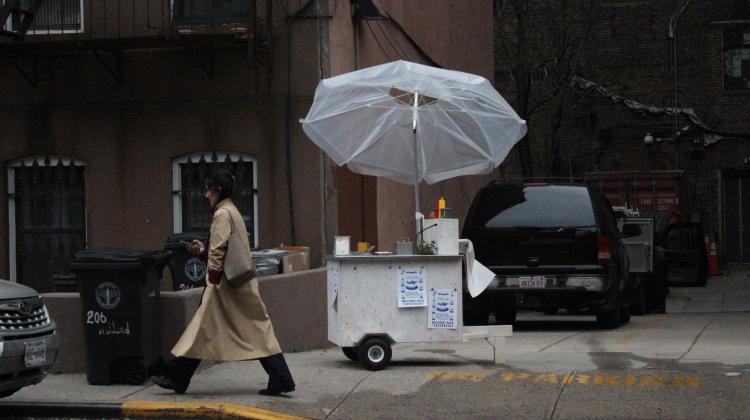
Installation project for "Corpus: Bodies of Data," by Data through Design through NYC Office of Technology and Innovation (OTI) Office of Data Analytics and BetaNYC
Exhibited at BRIC Art and Media Gallery, Brooklyn, NY (Spring 2025)
If the six bridges and tunnels which carry a majority of food into NYC constitute the city’s mouths then street vendors are their capillaries, delivering nutrients those final few inches into our own bodies. Taking the shape of an interactive hot dog stand, Final Inch appropriates a familiar form to re-imagine food infrastructure. Trading foil wrappers for systems maps and ketchup packets for herb gardens enables new narratives around networks that feed the city.
Final Inch explores the food supply infrastructure of New York city through an interactive hot dog stand. The cart is not only a staple of the city, but synonymous for the ultimate commodification of food. The installation features a full-sized hot-dog cart that allows visitors to engage with the routes and supply network that feeds the city. From transportation routes, wholesale markets, all the way to restaurants, food carts and ultimately the disposal of food-waste, Final Inch enables narratives on the infrastructure that feeds the city. Instead of boiling water, hot dogs, and relishing, the cart offers users to construct their own meal of choice, tracking all the necessary routes and stakeholders that constitute their meal. With projections, screens, and audio feed, this installation fosters an active engagement with the data that describes the infrastructure that makes up the digestive organs of New York, while growing all the main ingredients necessary to make a vegetarian hot dog. Fabrication schedule then corresponds to the 1.5-month maturation of an herb garden, which is preceded by a multi-week data research phase. Wheat plants, soybeans, mushrooms, garlic, thyme, celery, and tomato plants will grow in between monitors, screens, and projections, capturing the scope of food infrastructure in between data and produce.
Simon Lesina-Debiasi - Concept, Design, and Construction
Selenay Kiray - Sound
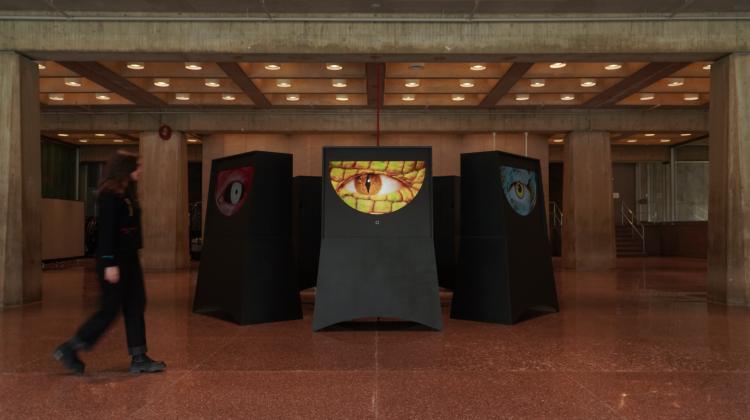
Installation project for MIT Artfinity Festival 2025
exhibited in Lobby 13 (Spring 2025)
This generative video installation engages viewers with a circle of animated digital eyes that respond to human presence. As participants approach, they encounter an unknown entity of digital avatars closely following their movement. A mediated face-to-face encounter with the unknown. Who is really watching whom?
In this generative video installation, viewers are presented with a digital interface which transforms into a meditation on observation and self-awareness. As participants approach, they encounter an unknown entity of digital avatars looking outwards. They carefully track their movements, creating an immediate and visceral sense of visual dialogue with the Other. Quite the opposite of surveillance, this is an invitation to explore the complex dynamics of seeing and being seen.
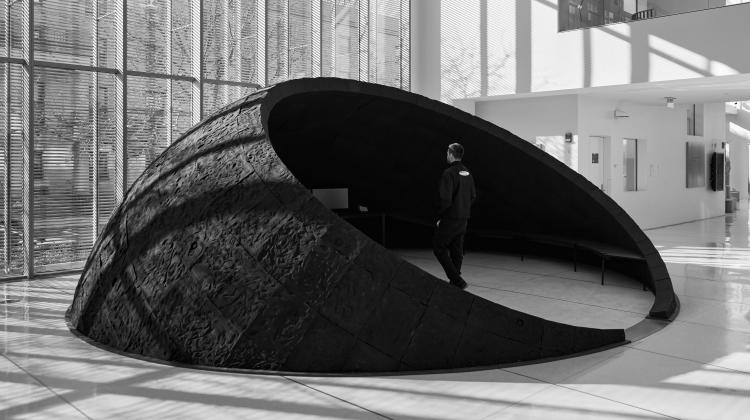
DESIGN LEAD
Mateo Fernandez, MIT Architecture, MArch student; MIT MAD (Morningside Academy for Design), 2024 Design Fellow
STRUCTURAL LEAD
Nebyu Haile, MIT Architecture, Building Technology Program, PhD
FABRICATION LEAD
Simon Lesina Debiasi, MIT Architecture, SMArchS Computation program; Self-Assembly Lab, research assistant
PROJECT
Nof Nathansohn, Farida Moustafa, Arzy Abliadzhyieva, Nebyu Haile, Oliver Moldow, Jared Laucks
FACULTY
J. Roc Jih, MIT Architecture, associate professor of the practice in architectural design
John Ochsendorf, MIT Class of 1942 Professor with appointments in the departments of Architecture and Civil and Environmental Engineering; founding director of MAD
Skylar Tibbits, MIT Architecture, associate professor of design research; Self-Assembly Lab, founder and co-director; MIT MAD, assistant director for education
Cody Paige, MIT Media Lab, director of the Space Exploration Initiative
Brandon Clifford, MIT Department of Architecture
MIT To the Moon To Stay project team: Don Derek Haddad, Fangzheng Liu, Nathan Perry, Sean Auffinger, Media Lab Director and Apollo Professor Dava Newman, and Ariel Ekblaw