


4.183

Architectural Design Workshop — HALF-TERM WORKSHOP: Spectres of Architecture: STORIES OF BELONGING(S) AT THE MET WAREHOUSE

Note: 1st meeting, T 2/7, 10am on Zoom: https://mit.zoom.us/j/97338571583

The Metropolitan Storage Warehouse was built in 1895, it is one of the oldest buildings in the MIT neighborhood and currently finds itself in the midst of redevelopment as it will become the new home of the School of Architecture and Planning in 2025. Upon completion the MET will provide approximately 110,000 square feet of academic, research, and gathering space including labs and studios for architecture students. As the building finds itself amidst active transformation this workshop will look back on the MET’s past lives, investigate its current working state, and ponder on its future through the tools of phonography, or field recording, to better understand the multiple layers of reality that converge at this site.

The MET Warehouse operated as a storage facility since its construction and its architectural elements– two-foot-thick-stone walls, vaulted ceilings, its medieval crenellations—all stood witness to years of internal life, the drama of the storage facility; the secret life of boxes that end up in secret rooms. In 2015, when the MET closed, much more than boxes were revealed to have occupied the nearly 1,500 internal units: private offices, satellite walk-in closets, a wine collection dating back to the mid-90’s, a saxophonist’s recording studio, extension art storage for Boston museums, the list goes on.  The MET Warehouse, like many other storage spaces, was a territory of exchange and protection for belonging(s): material, capital, life. How might the past lives of this building effect its future life as repository and vessel for a community of architects, designers, and thinkers (both academic and not, institutional and extra institutional)? In listening to the building might we learn more about its expansive ability to hold, archive, and safekeep and challenge our expectations for what forms of belonging might take place here next?

Spring
2023
3-0-6
G
Schedule
1st mtg. T 2/7, 10am in Room 7-429
Ongoing schedule: T 9-12
Location
7-429
Enrollment
Limited to 10
Preference Given To
MArch
Can Be Repeated for Credit
Yes
Document Uploads
4.s23

Number changed to 4.s23 (Special Subject: Design Studies — Solved with AI)

2/15/23 - this subject number has been changed to 4.s23

The rise of Artificial Intelligence (AI) dates back over 80 years when digital computers were developed during World War II. Using binary code to represent various phenomena made it possible to solve previously unsolvable numerical problems. AI has rapidly become a transformative technology in various fields, including the built environment. This course offers a thorough understanding of AI's role in the built environment, including hands-on examples of utilizing AI to tackle various urban challenges. Through data-driven case studies, this course will explore how emerging data and AI models are changing the assessment of the built environment. The structure of this course focuses on four key areas

  • Data Analysis in Satellite Imagery
  • Fundamental of Graph Theory and its applications in cities
  • Computer vision and  image processing
  • Theories of Artificial Neural Networks and image data classification. 

In this project-based course, students will work in teams to develop a computational approach that addresses the use of these four methods to solve an urban problem.  
 

Norhan Bayomi
Mohanned ElKholy
Spring
2023
3-3-0
Enrollment
Limited to 20
Can Be Repeated for Credit
Yes
Document Uploads
4.s24

Special Subject: Architecture Studies— Sao Paulo, a reinforced context

Departing from a PhD entitled ‘Sao Paulo, reasons for architecture'. The dissolution of buildings and how to pass through walls’ on how the experience of a city impacts in our way to act as architect, students will be: (1) introduced to the architectural context of Sao Paulo, its historic and geographical conditions and some of its iconic buildings; (2) followed by specific presentation and group discussion in order to identify the most significant aspects of the specific ‘constructive culture’ (3) asked to do their choices for case study (relationship between building and geography, structural principle, gradation between inside and outside) to research through physical models, drawings and descriptions; (4) the result of this workshop, potentially, could be shared with the academic community through a small exhibition.

Undergraduates welcome.

Spring
2023
2-2-5
G
Schedule
M 10-1
Location
3-329
Enrollment
Limited to 10
Preference Given To
BSA/BSAD, MArch, SMArchS
Can Be Repeated for Credit
Yes
4.s14

Special Subject: Architecture Design — Building the Page: Imprint 04

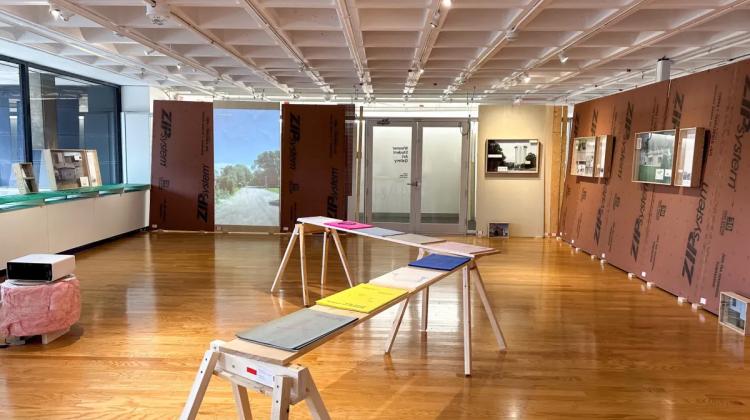
This course continues the Imprint publication workshops begun in 2020, which led to the student-designed and produced Imprint 01, 02, and 03. This class will help conceive the Imprint 04 publication, and a student team will be hired from its members to produce the publication in Summer 2023. This spring's class will function in a workshop format with three primary goals: 1.) To help students engage and acquire skills needed to conceive and produce a complex graphic design project like Imprint; 2.) To help students ask, and answer fundamental questions guiding this year's publication’s strategy: What can a book be? How do individuals curate a selection of essays in an edited volume or journal of a larger and complex community?; 3.) To catalyze exploration, and engagement with the intricate connections between text and image authorship in publications across design history. The class will be an opportunity (for all students in each graduate degree area in the Department of Architecture) to reflect on previous Imprint issues, revise the project’s structure and future goals, and as a way for new students to get involved in bringing the Imprint 04 project forward in summer 2023.

Spring
2023
2-0-7
G
2-0-10
G
Schedule
R 9-12
Location
4-146
Prerequisites
Permission of instructor
Can Be Repeated for Credit
Yes
Document Uploads
4.154

Architecture Design Option Studio — Parallel Play | Pedagogy, Form, and Daylight (Cassell / Yao)

“Perhaps our largest challenge [as teachers] is to overcome the fear of disequilibrium – our own and that of our students – and trust that those instances in which the bedrock of our assumptions and understanding begins to waver mark the edge of new understanding” Naomi Mulvihill. How Do You Say Twos in Spanish, If Two is Dos? Language as Means and Object in a Bilingual Kindergarten Classroom. 

This is an intensive studio with an emphasis on experimentation and production. There is no pre-determined or expected solution to the problem; students will delve deep into the intersection of pedagogy of dual-language learning, architectural form, and daylight, and take calibrated risks to produce new and extraordinary outcomes. As practicing architects, we synthesize detailed information and multiple ideas in the design of buildings. The studio will promote programmatic and formal invention through an iterative design process that is grounded in deep engagement with how people use and experience architecture. How do we gain new understanding of the relationship between the child and the community through design?  

The program will be a dual-language lab school, of approximately 22,000 square feet, located in Roxbury, MA. The school will serve students from kindergarten through second grade and provide spaces for the broader community. Dual-language schools are grounded in an approach to teaching young children their home language as well as English, in parallel. Beyond the classroom, this school model supports families within diverse immigrant and indigenous communities. We will engage directly with teachers from the community who specialize in dual-language learning, to better understand the nuances of the neighborhood and complexities of teaching multiple languages to young learners.  

The studio’s methodology will synthesize four areas of exploration sequentially: Within the classroom unit, how will engaging the specific pedagogy of dual-language learning lead to innovative design? How is the rigorous study of daylight integrated with the performative and programmatic design of the classroom and the entire building? How does the aggregation of classrooms create a larger organizational strategy for the building that supports the community of teachers and students? How does the identity of the building relate to the larger community of the neighborhood and city?  

Daylight conditions will be modeled using both Climate Studio software and physical models. The small size of the project will enable each student to study multiple design alternatives and variations for the program, site, massing, and envelope, using feedback gained from both analog and digital tools. 

The studio will meet twice weekly, Tuesdays and Fridays (50% virtual, 50% in person). The studio will be taught primarily by Stephen Cassell and Kim Yao. Their partner, Adam Yarinsky, will attend key pin-ups and reviews. There will be a studio trip to New York City to visit relevant projects and Architecture Research Office (ARO).  

Stephen Cassell
Kim Yao
Spring
2023
0-10-11
G
Schedule
TF 1-5
(50% in-person, 50% virtual)
Location
studio
Prerequisites
4.153
Required Of
MArch
Enrollment
mandatory lottery process
Can Be Repeated for Credit
No
Document Uploads